


 TOP
TOP

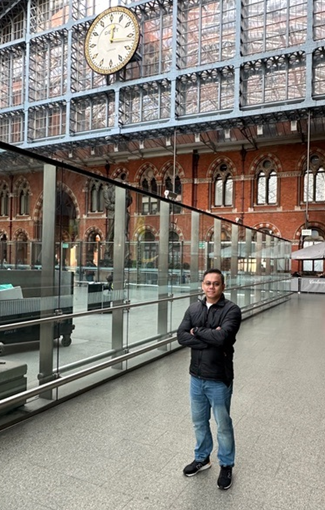
Muhammad Shahril Bin Roslan
After more than a decade of working experience, I reached a point in my career where I wanted to build on what I had learned professionally with a stronger academic foundation. While my years of experience had taught me a great deal, I wanted to develop a deeper understanding of the principles behind what I do — from evidence-informed decision-making and professional ethics to leadership and research. I wanted to go beyond simply knowing how to do something and develop a better understanding of why we do it.
This was what led me to pursue the Bachelor of Science with Honours in Paramedic Science (Top-Up) with Coventry University at PSB Academy.
One of the key reasons I chose the programme was its relevance to my professional experience. With my existing experience, I was able to enter directly into the final third year of the degree. Being able to study locally while continuing to manage my work and shift commitments also made the programme a practical choice for me. What I appreciated most was that the curriculum did not simply reinforce what I already knew. Instead, it challenged me to think more critically about my professional practice. Modules covering areas such as leadership, professional accountability, ethics, research and evidence-informed practice gave me a different perspective and encouraged me to look at familiar situations in a more structured way.
The research and evidence-informed practice components were particularly valuable to me. They helped me develop the ability to critically evaluate information and consider how research findings could be translated into improvements in professional practice. This has made me more conscious of the reasoning behind my decisions rather than simply relying on experience or established practices.The leadership component was also especially relevant as I took on greater responsibilities in my career. It gave me a more structured understanding of areas such as communication, decision-making, crisis management and managing people. These are skills that I can apply beyond the classroom and into my day-to-day responsibilities.
I also appreciated learning from lecturers who had professional experience in the field. They were able to connect academic concepts and professional standards to real situations that we may encounter in our careers. This made the learning much more relatable because I could connect what we discussed in class to experiences from my own working environment.
One lesson that has stayed with me throughout the programme is that experience should never lead to complacency. Even after many years in the workforce, there is always room to reflect, learn and question whether there is a better way of doing things.
Balancing work, professional responsibilities and my degree was certainly challenging, but it also made the experience more meaningful. I could relate what I was learning to my professional environment and see how the knowledge could be applied in practice. I would not necessarily say that having a degree has given me an "edge" over others. Instead, I feel it has equipped me to approach my responsibilities with a broader perspective and greater confidence. I am now more conscious of the evidence behind my decisions, more comfortable thinking critically about different situations and better equipped to take on greater responsibilities.
For me, pursuing this degree was not simply about obtaining another qualification. It was about building on the experience I already had and becoming a more reflective, knowledgeable and well-rounded professional.The journey has reinforced my belief that learning should not stop once you have gained experience. There is always an opportunity to grow, and for me, this degree was an important part of that journey.