TOP
TOP

After Retrenchment: Finding Your New Direction

Think of retrenchment like getting knocked out in a game—frustrating, unexpected, and a little embarrassing. But here’s the thing: you get to hit “reset”, rethink your strategy, and maybe even switch to a game you enjoy more.
Discover how to level up after retrenchment, turning a tough break into your next big win. Along the way, you’ll learn how to rebuild your confidence, explore new opportunities, and make a career transition that feels like an upgrade, not a setback.
Key Takeaways
- Retrenchment can be difficult to navigate, but taking time to regroup, reframe your experience, and seek support will help you approach your next move with a clearer mindset.
- Life post-retrenchment may lead to many paths, from re-employment to starting your own venture.
- Concerns about age, study gaps, or credibility are natural, but with the right mindset and support, going back to school after retrenchment can be a realistic and rewarding step.
- Further study can be a strategic move when it’s tied to your goals and market demand, especially if it gives you practical experience and connections that boost your confidence in the job market.
What Are the First Steps After Retrenchment?
After retrenchment, it’s often tempting to jump straight into sending out job applications. But before you rush ahead, take a moment to breathe. Losing a job isn’t just a career change—it’s a personal one as well. It can shake your confidence, disrupt your routine, and leave you wondering what comes next. Slowing down gives you the space to make clearer, more intentional decisions about your future.
How to Process the Loss and Reset

1. Acknowledge the Shock
It’s okay to feel upset, anxious, or even a bit relieved after retrenchment. Whatever you’re feeling, don’t push it aside. Let yourself process it—talk to someone you trust, write it down, or simply take some quiet time for yourself. Processing these emotions fully means you’re less likely to carry them into your next role or decision, where they could cloud your judgement.
2. Remember That It’s Not About You
Most retrenchments don’t happen because you weren’t good at your job. According to the Labour Market Report 1Q 2024, reorganisation and restructuring were the most common reasons for retrenchment across all industries in Singapore. In other words, it’s usually about business strategy or market conditions—not your value as a professional—so try not to let it shake your confidence moving forward.
3. Switch From “What I Lost” to “What’s Next”
Once you’ve had some time to process, start asking yourself new questions: What do I want now? What am I naturally good at? Which parts of my past work did I actually enjoy? These answers can help shape your next move. Shifting your focus to possibilities instead of losses makes it easier to spot opportunities after retrenchment and recognise when a door is opening in front of you.
4. Reframe the Experience
Yes, losing your job is a setback, but it can also be an opportunity to reassess. Think of it as a career refresh. You’ve built resilience, picked up valuable skills, and learnt lessons you can carry into whatever comes next. When you frame your retrenchment as part of your growth story, it becomes a point of strength you can share in interviews, showing employers that you can adapt and bounce back.
5. Find Your Support System
Whether it’s friends, mentors, or a career coach, surrounding yourself with people who can listen and give perspective will make the road ahead less daunting. They can help you spot strengths you might overlook and open your eyes to opportunities you hadn’t considered. If the emotional weight feels heavy, speaking to a counsellor after retrenchment can help you feel more grounded before making big decisions. After all, a clear mind makes for better career moves.
What Are Your Options After Retrenchment?
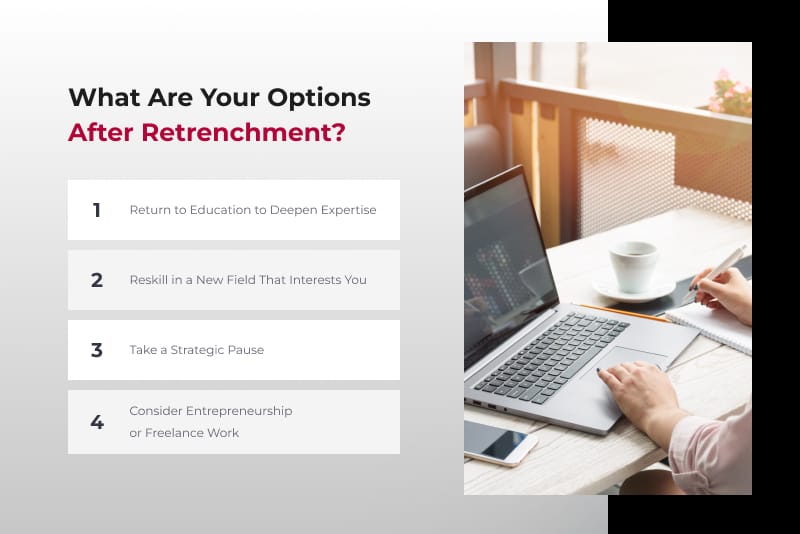
Next, consider your next steps. Exploring new possibilities not only keeps you busy during this transition but also helps you stay focused on what lies ahead.
1. Return to Education to Deepen Expertise
If you still love your field and want to climb higher even after retrenchment, investing in further education can be a helpful stepping stone toward specialisation or leadership roles. An undergraduate degree or master's programme can provide deeper knowledge, advanced skills, and the credentials employers look for in senior positions. For instance, a Master of Business Administration may help prepare you for management roles through a contemporary, critical, and applied programme of study in business and management.
2. Reskill in a New Field That Interests You
Maybe you’ve always been curious about areas like digital marketing, business analytics, or IT, but never had the time or opportunity to explore them. Life after retrenchment can be the perfect moment to pivot into something fresh—especially if you choose a path that aligns with your strengths and interests. At PSB Academy, we offer full-time, part-time, and online programmes designed for adults making a mid-career switch. Through our courses, we aim to help students gain the knowledge, practical skills, and confidence needed to take on a new role—without putting the rest of their lives on hold.
3. Take a Strategic Pause
Not every career move needs to happen immediately. Some people use the period after retrenchment to volunteer, freelance, or explore personal projects. This isn’t “doing nothing”—it’s a way to test out new roles, build connections, and discover what energises you. For example, helping a non-profit with marketing could reveal a passion for the social sector, or freelancing in design could help you decide whether creative work is the right fit.
4. Consider Entrepreneurship or Freelance Work
If you’ve built up industry experience and a strong professional network, starting your own business or going freelance might be worth exploring. It could be as simple as offering consultancy in your area of expertise or as bold as launching a new product. Even if you’re unsure about going all-in, you can use this time to test ideas on a small scale.
How to Move Forward After Retrenchment: Turning Insight Into Action

The next chapter of life after retrenchment doesn’t have to be a repeat of the last one—in fact, it can be the perfect time to shape a career that’s more in line with your strengths, interests, and lifestyle. Once you’ve assessed your options, you can start taking deliberate steps to turn those goals into reality.
Common Fears About Going Back to School After Retrenchment
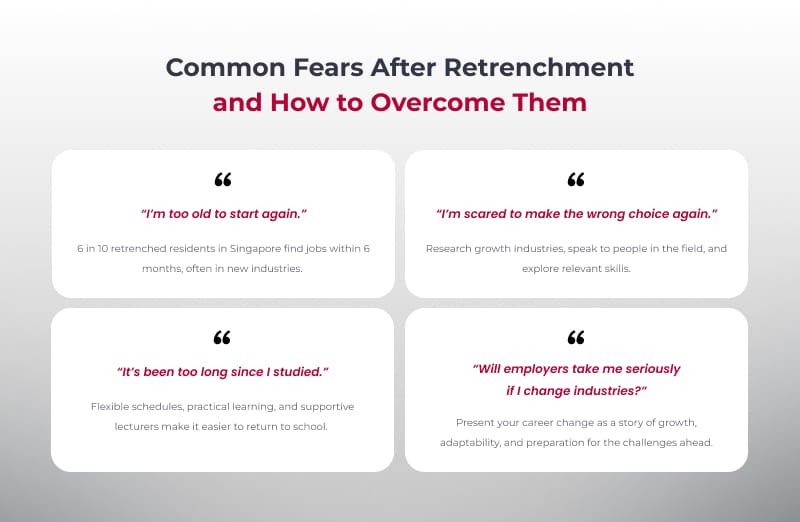
“I’m too old to start again.”
Not necessarily. At PSB Academy, our private diploma and bachelor’s degree courses at private education institutions are designed for people at all stages of life. In fact, your professional background could give you an edge—you’ll be able to connect new skills to real-world experience faster than someone starting fresh.
“I won’t be able to keep up”
It’s common to worry that returning to school after years in the workforce will be overwhelming. However, at PSB Academy, we offer full-time, part-time, and fully online programmes, allowing you to choose what suits you best. Additionally, we offer additional resources, including academic consultations, learning support, and personal counselling to help ease the transition.
“Will employers take me seriously if I change industries?”
Most likely, as long as you can clearly explain your pivot. A recent LinkedIn survey found that 39% of employers look for technical expertise, and 31% prioritise transferable skills when hiring. This shows that what you already know, paired with newly acquired training, can be a strong combination. Present your career change as a story of growth, adaptability, and preparation for the challenges ahead, so employers can see the value you bring to a new field.
“It’s too expensive.”
The cost of further adult education is a common worry, especially right after retrenchment. But many private education institutions, including PSB Academy, offer instalment plans, course funding options, and accelerated programmes that make studying more accessible. Viewing education as an investment rather than an expense can also help you see the long-term value it brings to your career.
Tips for Going Back to School: A Strategic Step Forward

If you’re leaning towards further study after retrenchment, make it a purposeful investment rather than just something to fill the time. Education can be a powerful tool to retrain for a new job or strengthen your current career path, but only if it’s chosen with intention.
1. Find the Right Course for Your Career Goals
Start by identifying where your skills, interests, and market demand intersect. Consider how your passion can be applied in industries that are growing, or look for roles where transferable skills allow you to enjoy the work while staying relevant. If you enjoy problem-solving and working with numbers, a data analytics course could be a strong pivot. If you’re detail-oriented and like coordinating processes, a degree in supply chain management might be ideal. Talking to career advisors or attending course previews can also help you narrow down your options.
2. Bridge the Gap With Practical, Industry-Relevant Skills
Look for programmes that go beyond theory. Courses that incorporate case studies, group projects, and industry engagement prepare you for real workplace challenges. At PSB Academy, programmes are designed in collaboration with an Industry Advisory Panel to ensure they remain relevant to market needs. This approach gives you opportunities to apply what you learn in practical settings, so you graduate with both a qualification and a portfolio of work to present to employers.
3. Rebuild Routine and Motivation Through Structure
After retrenchment, days can feel unstructured, which can impact motivation. Enrolling in a course creates a built-in schedule with lectures, assignments, and milestones to work towards. This structure can help you regain momentum, keep your mind engaged, and give you a sense of progress while you prepare for your next career move.
4. Surround Yourself With a Like-Minded Learning Community
One of the often-overlooked benefits of returning to school is the people you meet. Your classmates could be fellow professionals exploring new directions, recent graduates starting their first roles, or industry insiders expanding their skill sets. These connections can play an important role in future opportunities down the line.
5. Keep an Eye on the Job Market While You Learn
Even while you’re studying, keep a pulse on hiring trends, industry news, and skill demands in your target field. This awareness helps you connect what you’re learning to the needs of the job market and adapt your learning journey accordingly. By the time you graduate, you’ll not only have the right skills but also know exactly how to position yourself for employers—improving your overall readiness for the modern job market.
Frequently Asked Questions
1. Am I too old to return to school?
Not at all! Many adult learners return to education in their 30s, 40s, or even later. Most private education institutions, including PSB Academy, offer programmes well-suited for mature students with flexible schedules, practical content, and supportive learning environments. Students also have access to learning support and counselling services, ensuring they get both the academic guidance and personal assistance needed to succeed.
2. What if I haven't studied in years? Will I be able to keep up?
It’s a common concern, but most adult learners adjust quickly. Many programmes are structured with this in mind and offer comprehensive academic support, flexible class formats, and a mix of learning approaches—with some courses being more theory-based while others are coursework-driven. All of these come together to make the transition into studying smoother.
3. What if I’m still not sure what I want to do next?
That’s completely normal, especially after a major life change like retrenchment. The pressure to have it all figured out can be overwhelming, but clarity often comes through exploration, not overthinking. Reflect on what you’ve enjoyed in previous roles, what you’re naturally good at, or even what you’re curious to learn more about.
From Setback to Springboard

Retrenchment isn’t the final chapter—it’s just a plot twist. The experiences, skills, and resilience you’ve built are still yours to use, reshape, and grow. Whether you choose a career switch into a rising industry, pursue a degree to aim for leadership, or explore full-time, part-time, or online study to test a new path, you’re still in control of the narrative.
At PSB Academy, we’ll help you write the next chapter with confidence and clarity. With campuses in the heart of the city, industry-aligned programmes, and access to helpful resources, we provide not just education but the connections and guidance you need to succeed.
Enquire with us today.